

Contact Us
SealingYour Basement
A leaking basement is more than an inconvenience, it is often the first warning sign of a larger moisture or foundation problem. Water entering through basement walls, floor joints, foundation cracks, or window wells can gradually damage concrete, weaken structural components, encourage mold growth, and create unhealthy indoor air conditions. Ignoring even a minor leak can lead to costly repairs over time.
At Philadelphia Foundation Repair & Basement Waterproofing, we provide permanent basement leak repair solutions tailored to the unique conditions found throughout the Philadelphia metro area. From historic row homes in Center City to newer homes in Bucks, Montgomery, Chester, and Delaware Counties, our specialists identify the true source of water intrusion instead of simply treating the visible symptoms.
Our approach combines detailed inspections, moisture diagnostics, drainage analysis, and proven repair methods to restore a dry, healthy basement that remains protected through every season.
Why Basement Leaks Happen
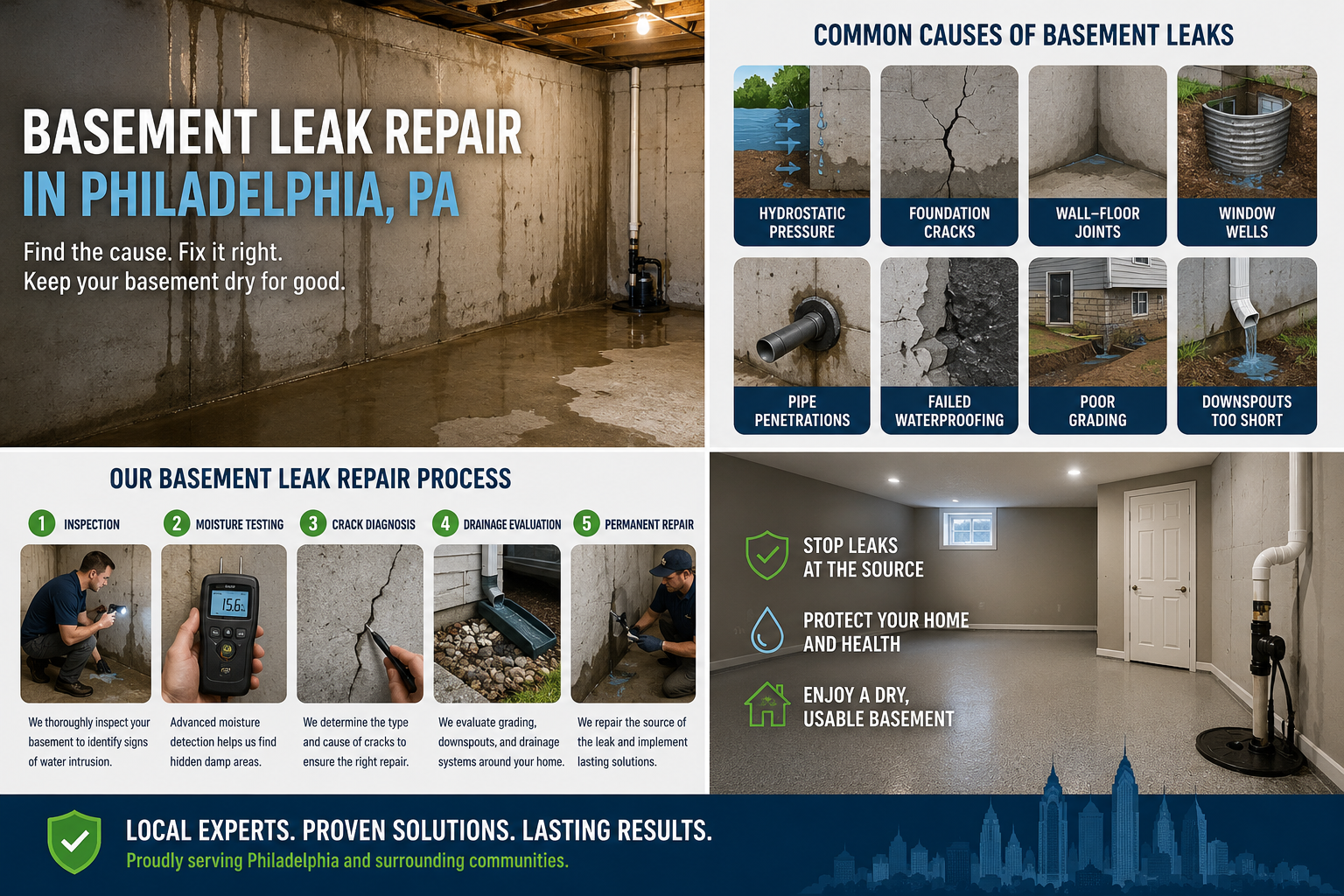
Pennsylvania homeowners face a unique combination of environmental and structural conditions that make basement water intrusion a common concern. The region experiences significant annual rainfall, snowmelt, seasonal freeze-thaw cycles, and varying soil compositions that place continuous pressure on foundation walls. As the soil surrounding a home becomes saturated, hydrostatic pressure increases, forcing groundwater toward the path of least resistance, often through tiny cracks, construction joints, porous concrete, or aging waterproofing systems.
Many homes throughout the Philadelphia metro were built decades ago using construction techniques and waterproofing materials that have naturally deteriorated over time. Foundation settlement, shifting soils, clogged footing drains, deteriorated mortar joints, and improperly directed roof runoff all contribute to basement leaks that become progressively worse if left untreated.
- Common causes of basement leaks include:
- Foundation wall cracks
- Floor and wall joint seepage
- Hydrostatic water pressure
- Failed exterior waterproofing membranes
- Clogged or damaged footing drains
- Leaking basement windows and window wells
- Improper grading around the home
- Overflowing gutters and short downspouts
- Pipe penetrations through foundation walls
- Aging concrete and masonry foundations
*Many homeowners assume placing a dehumidifier in the basement will solve the problem. While it may reduce humidity, it does nothing to stop water from entering the structure. Effective basement leak repair begins by identifying where the water originates and implementing a permanent solution designed specifically for your home's conditions.
Common Signs Your Basement Has a Water Intrusion Problem
Not every basement leak appears as standing water after a heavy rainstorm. In many cases, water intrusion develops slowly and leaves subtle warning signs long before significant damage occurs. Recognizing these indicators early can help prevent expensive structural repairs and reduce the risk of mold growth.
You may have a basement leak if you notice:
Water stains on basement walls
Dark streaks, discoloration, or mineral deposits often indicate that moisture is moving through concrete or masonry walls.
Damp or wet basement floors
Water collecting along the perimeter of the basement or near wall joints usually suggests groundwater infiltration beneath the slab.
White powder on concrete walls
Known as efflorescence, these mineral deposits are left behind when water evaporates after passing through concrete.
Musty odors
Persistent damp smells frequently indicate hidden moisture behind finished walls, beneath flooring, or inside insulation.
Cracks in foundation walls
Even hairline cracks can widen over time and become direct entry points for groundwater during heavy rainfall.
Mold or mildew growth
Excess moisture creates the ideal environment for mold, which can damage building materials and reduce indoor air quality.
Peeling paint or bubbling wall finishes
When moisture becomes trapped behind coatings, paint begins to blister, peel, or separate from the surface.
Increased indoor humidity
If your basement always feels damp regardless of the weather, moisture may be entering continuously through the foundation.
Water after heavy rain
If your basement only leaks during storms, the problem may involve hydrostatic pressure, exterior drainage, or roof water management rather than plumbing.
Even minor warning signs deserve professional evaluation. Water rarely resolves itself—instead, small leaks often become larger, more expensive problems over time.
“After seeing you repair our neighbor’s foundation and fix their basement issues, we decided to give you a call. Philly Foundation Repair handled our home better than we expected. Ed came out pretty fast and gave us a thorough break down on exactly what was happening, why it was happening, and a few solutions to fix it.
When the crew came they went straight to work and were very kind. We highly recommend Philly Foundation Repair to everyone.”
~ Lisa T, Parker - Swarthmore, PA
Signs Your Home May Need Basement Underpinning
New Paragraph
The Basement Underpinning Process in Philadelphia
Ever
How Long Basement Underpinning Takes
The ti
Basement Underpinning Compared to Other Foundation Repairs
New Paragraph
Cost of Basement Underpinning in Philadelphia, PA
The
Benefits of Basement Underpinning
New Paragraph
Basement Underpinning for Philadelphia Residential Properties
Base