
Basement
Leak Repair
Philadelphia, PA
Contact Us
SealingYour Basement
A leaking basement is more than an inconvenience, it is often the first warning sign of a larger moisture or foundation problem. Water entering through basement walls, floor joints, foundation cracks, or window wells can gradually damage concrete, weaken structural components, encourage mold growth, and create unhealthy indoor air conditions. Ignoring even a minor leak can lead to costly repairs over time.
At Philadelphia Foundation Repair & Basement Waterproofing, we provide permanent basement leak repair solutions tailored to the unique conditions found throughout the Philadelphia metro area. From historic row homes in Center City to newer homes in Bucks, Montgomery, Chester, and Delaware Counties, our specialists identify the true source of water intrusion instead of simply treating the visible symptoms.
Our approach combines detailed inspections, moisture diagnostics, drainage analysis, and proven repair methods to restore a dry, healthy basement that remains protected through every season.
Why Basement
Leaks Happen
Pennsylvania homeowners face a unique combination of environmental and structural conditions that make basement water intrusion a common concern. The region experiences significant annual rainfall, snowmelt, seasonal freeze-thaw cycles, and varying soil compositions that place continuous pressure on foundation walls. As the soil surrounding a home becomes saturated, hydrostatic pressure increases, forcing groundwater toward the path of least resistance, often through tiny cracks, construction joints, porous concrete, or aging waterproofing systems.
Many homes throughout the Philadelphia metro were built decades ago using construction techniques and waterproofing materials that have naturally deteriorated over time. Foundation settlement, shifting soils, clogged footing drains, deteriorated mortar joints, and improperly directed roof runoff all contribute to basement leaks that become progressively worse if left untreated.
- Common causes of basement leaks include:
- Foundation wall cracks
- Floor and wall joint seepage
- Hydrostatic water pressure
- Failed exterior waterproofing membranes
- Clogged or damaged footing drains
- Leaking basement windows and window wells
- Improper grading around the home
- Overflowing gutters and short downspouts
- Pipe penetrations through foundation walls
- Aging concrete and masonry foundations
*Many homeowners assume placing a dehumidifier in the basement will solve the problem. While it may reduce humidity, it does nothing to stop water from entering the structure. Effective basement leak repair begins by identifying where the water originates and implementing a permanent solution designed specifically for your home's conditions.
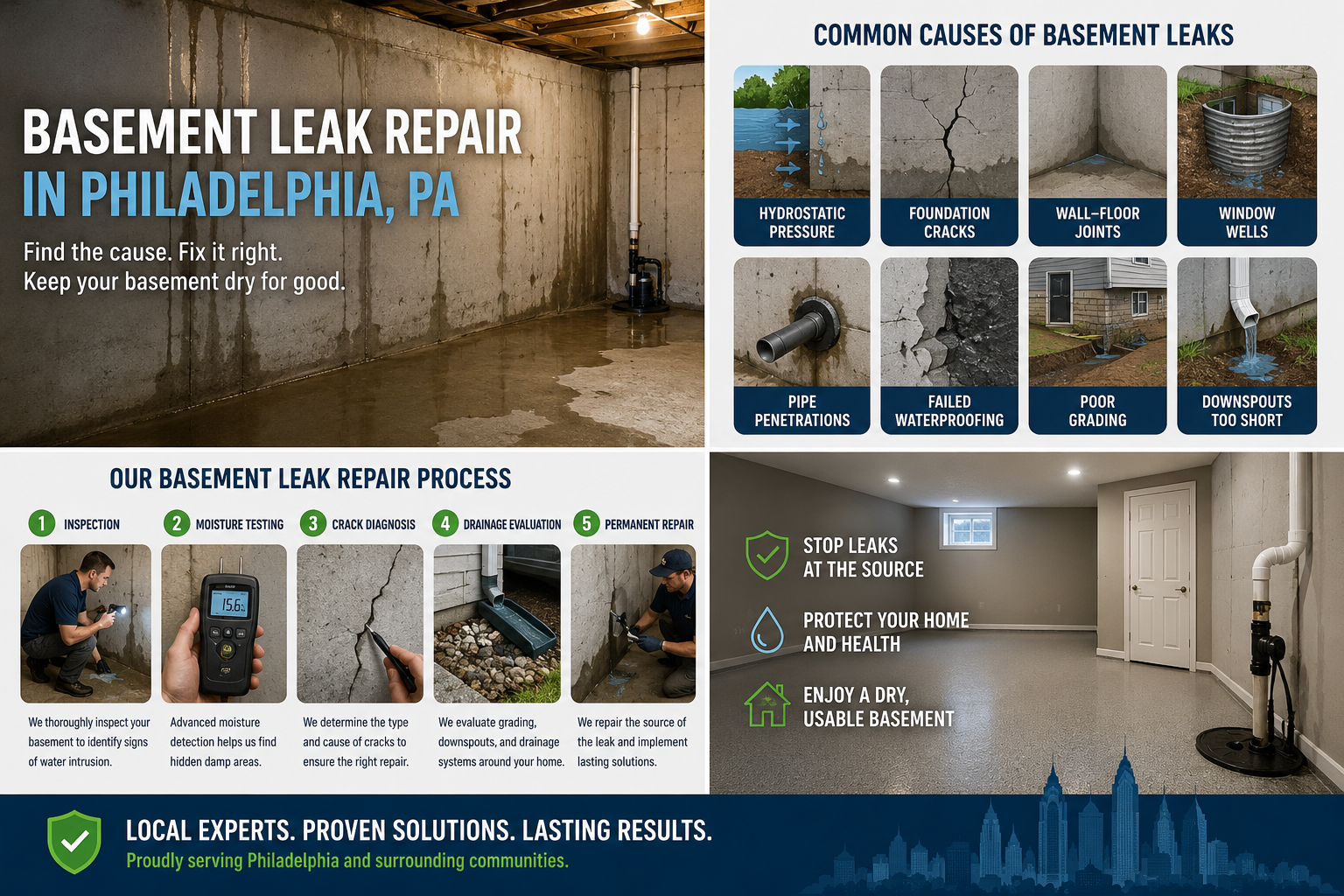
Common Signs Your Basement Has a Water Intrusion Problem
Not every basement leak appears as standing water after a heavy rainstorm. In many cases, water intrusion develops slowly and leaves subtle warning signs long before significant damage occurs. Recognizing these indicators early can help prevent expensive structural repairs and reduce the risk of mold growth.
You may have a basement leak if you notice:
Water stains on basement walls
Dark streaks, discoloration, or mineral deposits often indicate that moisture is moving through concrete or masonry walls.
Damp or wet basement floors
Water collecting along the perimeter of the basement or near wall joints usually suggests groundwater infiltration beneath the slab.
White powder on concrete walls
Known as efflorescence, these mineral deposits are left behind when water evaporates after passing through concrete.
Musty odors
Persistent damp smells frequently indicate hidden moisture behind finished walls, beneath flooring, or inside insulation.
Cracks in foundation walls
Even hairline cracks can widen over time and become direct entry points for groundwater during heavy rainfall.
Mold or mildew growth
Excess moisture creates the ideal environment for mold, which can damage building materials and reduce indoor air quality.
Peeling paint or bubbling wall finishes
When moisture becomes trapped behind coatings, paint begins to blister, peel, or separate from the surface.
Increased indoor humidity
If your basement always feels damp regardless of the weather, moisture may be entering continuously through the foundation.
Water after heavy rain
If your basement only leaks during storms, the problem may involve hydrostatic pressure, exterior drainage, or roof water management rather than plumbing.
Even minor warning signs deserve professional evaluation. Water rarely resolves itself—instead, small leaks often become larger, more expensive problems over time.
Our Basement Leak Repair Process
Every basement leak is different. Rather than applying a one-size-fits-all solution, our technicians perform a comprehensive evaluation to determine exactly how water is entering your home. By identifying the source of intrusion, we can recommend repairs that solve the problem at its origin rather than temporarily masking the symptoms.
Comprehensive Inspection
Every project begins with a detailed inspection of the basement, foundation walls, floor slab, window wells, utility penetrations, and surrounding exterior conditions. We evaluate visible damage while also searching for hidden signs of moisture that homeowners often overlook. During the inspection, we assess:
- Active water entry points
- Foundation movement
- Wall and floor cracks
- Previous repair attempts
- Drainage performance
- Exterior grading conditions
- Gutter and downspout discharge
- Signs of long-term moisture exposure
PLUS MORE!
Moisture Testing
Water doesn't always leave obvious evidence. Using professional moisture detection equipment, we locate hidden damp areas inside walls, beneath flooring, and around structural components. Moisture mapping allows us to identify affected areas before damage becomes more extensive.
This step helps determine whether moisture is coming from groundwater intrusion, condensation, plumbing leaks, or other environmental conditions.
Crack Diagnosis
Not every crack requires the same repair method. Our specialists evaluate crack width, direction, movement, and structural significance before recommending an appropriate solution.
We determine whether cracks are:
- Cosmetic shrinkage cracks
- Settlement-related foundation cracks
- Active water-entry cracks
- Structural foundation concerns
This evaluation ensures the repair addresses both the leak and the underlying cause whenever necessar
Drainage Evaluation
Many basement leaks originate outside the home rather than inside the foundation itself. Our team evaluates how water moves around your property and whether drainage systems are effectively directing groundwater away from the structure.
We inspect:
- Soil grading
- Surface drainage
- Downspout discharge
- Footing drainage systems
- French drains
- Sump pump performance
- Window well drainage
Improving drainage often prevents recurring leaks and reduces hydrostatic pressure against foundation walls.
Permanent Basement Leak Repair
Once the source of water intrusion has been identified, we develop a customized repair plan designed for long-term protection—not temporary fixes.
Depending on the findings, permanent solutions may include:
- Foundation crack sealing
- Interior waterproofing systems
- Exterior waterproofing
- Drainage improvements
- French drain installation
- Sump pump installation or replacement
- Basement wall waterproofing
- Foundation sealing
- Window well drainage improvements
- Moisture management systems
Our goal is simple: stop water from entering your basement, protect your home's structural integrity, and provide lasting peace of mind through professional basement leak repair solutions built for Pennsylvania's challenging climate.
What Causes Basement Leaks?
A basement leak rarely happens because of a single issue. In most Philadelphia homes, water intrusion is the result of several conditions working together. Heavy rainfall, saturated soil, aging foundations, and drainage problems can all allow groundwater to find its way inside. Identifying the exact cause is essential because every leak requires a solution tailored to the source—not just the visible water.
Hydrostatic Pressure
Hydrostatic pressure is one of the most common causes of basement leaks. As rainwater and melting snow saturate the soil surrounding your home, water builds pressure against the foundation walls. Concrete is durable, but it is naturally porous. Over time, this pressure forces moisture through tiny openings, wall joints, and existing cracks.
Signs hydrostatic pressure may be affecting your basement include:
- Water entering after heavy rain
- Damp basement walls
- Seepage where the wall meets the floor
- Efflorescence (white mineral deposits)
- Bowing or inward-moving foundation walls
Foundation Cracks
Foundation cracks create direct pathways for groundwater to enter your basement. While some cracks are caused by normal concrete curing, others develop because of settlement, shifting soils, seasonal expansion and contraction, or structural movement.
Common crack locations include:
- Vertical wall cracks
- Horizontal wall cracks
- Stair-step cracks in masonry
- Floor slab cracks
- Corners of basement walls
Repairing the crack alone may not permanently solve the problem if the underlying cause remains untreated.
Wall-to-Floor Joints
The cove joint—the area where the basement wall meets the floor—is one of the most common leak locations. Water under pressure naturally follows this joint because it is created where two separate concrete pours meet.
Leaks along the wall-floor joint often appear as:
- Water around the basement perimeter
- Damp carpeting near walls
- Puddles after storms
- Continuous seepage during wet seasons
Window Wells
Basement windows are designed to provide natural light and emergency egress, but they can also become entry points for water when window wells fill with rainwater or lack proper drainage.
Problems often include:
- Clogged window well drains
- Broken window seals
- Improper grading
- Damaged window frames
- Overflowing wells during heavy storms
Pipe Penetrations
Every utility line entering your basement passes through the foundation. As homes settle, small gaps may develop around these penetrations, allowing groundwater to seep inside.
Areas commonly inspected include:
- Water supply lines
- Sewer penetrations
- Gas line entries
- Electrical conduits
- HVAC openings
Failed Waterproofing
Exterior waterproofing materials have a limited lifespan. As coatings deteriorate and membranes age, groundwater gains easier access to foundation walls.
Older homes may experience:
- Cracked waterproof coatings
- Damaged drainage boards
- Missing foundation membranes
- Worn sealants
- Aging drainage systems
Poor Grading
Your yard should always slope away from your home's foundation. When landscaping settles or grading is incorrect, rainwater collects around the basement walls instead of draining away.
Signs of poor grading include:
- Standing water near the home
- Soil erosion
- Water flowing toward the foundation
- Constantly wet landscaping beds
Downspouts
Gutters protect your roof, but downspouts protect your foundation. If they discharge water too close to your home, thousands of gallons of rainwater each year can saturate the surrounding soil and increase hydrostatic pressure.
Common problems include:
- Short downspout extensions
- Clogged gutters
- Loose gutter connections
- Downspouts draining next to the foundation
Why Homeowners Across the Philadelphia Metro Choose Us
When it comes to basement leak repair, experience matters—but so does finding the true cause of the problem. Our team focuses on permanent solutions rather than temporary fixes, helping homeowners with Leak Repair in Philadelphia, Bucks County, Montgomery County, Chester County, Delaware County, and surrounding communities protect one of their biggest investments.
Homeowners choose us because we provide:
- Thorough basement leak inspections
- Honest recommendations with no unnecessary repairs
- Experienced waterproofing specialists
- Customized repair plans for every home
- Advanced moisture detection technology
- Proven interior and exterior waterproofing solutions
- Foundation crack repair expertise
- Drainage system evaluations
- High-quality workmanship
- Long-lasting repair solutions
- Respectful service and clear communication
- Clean job sites from start to finish
Our goal is simple: identify where the water is coming from, stop it permanently, and help homeowners enjoy a dry, healthy basement for years to come.
Basement Leak Repair vs. Basement Waterproofing
Basement Leak Repair
Basement leak repair focuses on stopping an existing source of water intrusion. This service is designed to identify how water is entering your basement and repair that specific issue.
Leak repair may involve:
- Crack sealing
- Joint repairs
- Window well repairs
- Drainage corrections
- Pipe penetration sealing
What is the most common cause of basement leaks?
Hydrostatic pressure is one of the leading causes. As saturated soil presses against foundation walls, groundwater finds its way through cracks, joints, and porous concrete.
Basement Waterproofing
Basement waterproofing is a broader solution designed to prevent future water intrusion. Rather than repairing one leak, waterproofing protects the entire basement against moisture and groundwater pressure.
Waterproofing systems may include:
- Interior drainage systems
- Exterior waterproof membranes
- French drains
- Sump pump systems
- Vapor barriers
- Foundation drainage improvements
Many homeowners benefit from combining both services. First, the active leak is repaired. Then, a waterproofing system is installed to reduce the risk of future leaks and provide long-term protection.