Wet Basement
Repair Services
Philadelphia, PA
Contact Us
Why Basements Become
Wet in Philadelphia
A wet basement is one of the most common problems homeowners face throughout the Philadelphia area and throughout Pennsylvania. While many people assume it's just the result of a heavy rainstorm, water entering your basement is usually a symptom of a larger issue involving your home's drainage system, foundation, or waterproofing. Water is getting inside somehow, and we're here to find out why.
Left untreated, even a small amount of moisture can gradually lead to mold growth, damaged belongings, deteriorating masonry, and costly structural repairs.
Philadelphia's older neighborhoods present unique waterproofing challenges. Many homes were built decades, or even more than a century ago using stone, brick, or block foundations.
Although these materials are durable, years of exposure to groundwater, seasonal weather changes, and natural settling can create tiny openings where water begins to enter. Once moisture finds a path inside, it often returns with every significant rainfall.
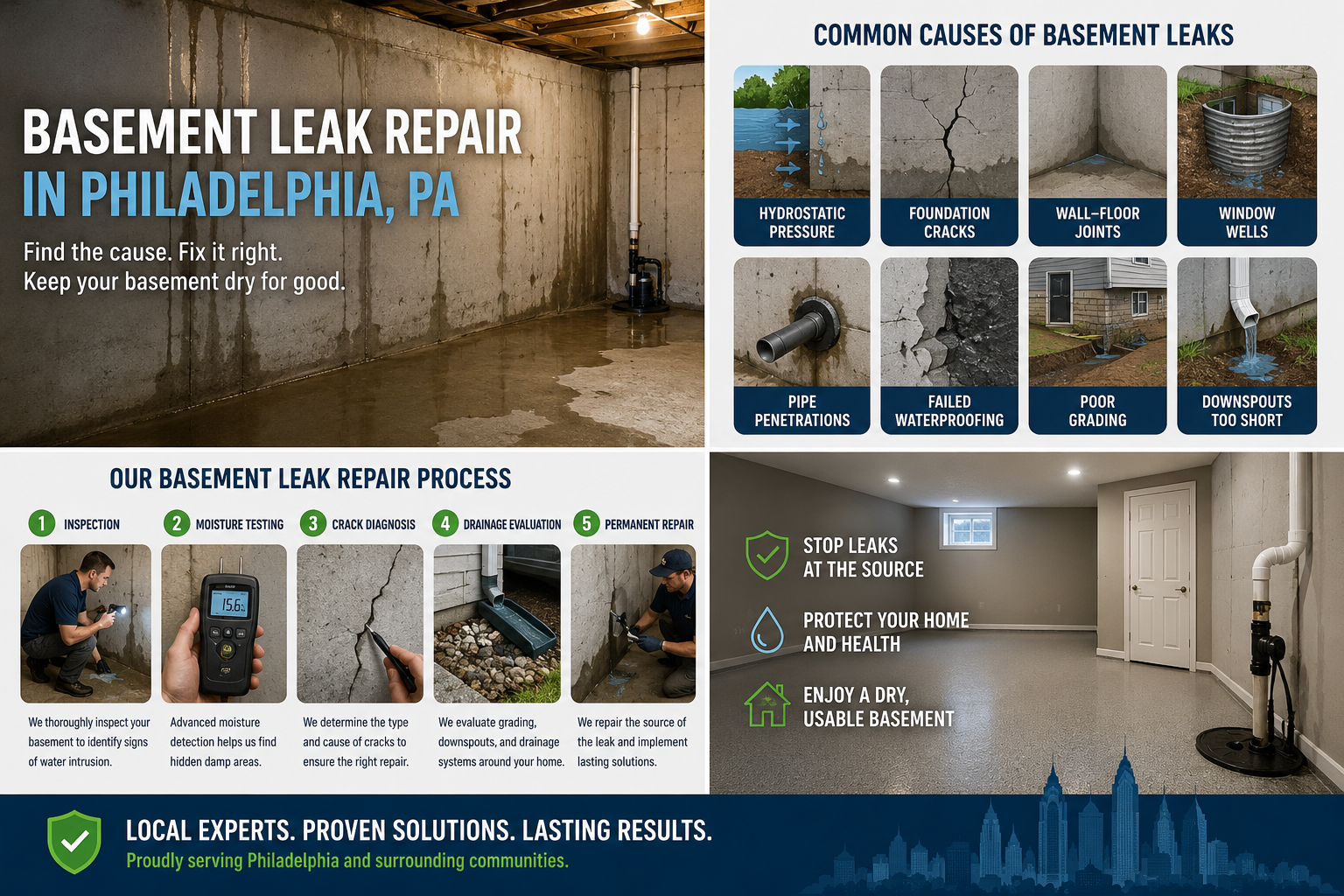
Hydrostatic pressure is one of the leading causes of wet basements. After prolonged or heavy rain, the soil surrounding your home becomes saturated with water. As the ground fills with moisture, pressure builds against your foundation walls and floor. Eventually, water pushes through cracks, porous concrete, construction joints, or weak areas in the foundation.
Older waterproofing systems can also lose their effectiveness over time. Waterproof coatings deteriorate, drain tile systems clog, and foundation sealants eventually break down. Combined with poor grading, clogged gutters, or improperly placed downspouts, excess water can collect around your foundation instead of draining safely away.
Some homeowners only notice moisture after severe storms, while others deal with damp walls, musty odors, or humidity year round. Regardless of how often it occurs, a wet basement is not something that should be ignored. Identifying the source early allows for a permanent solution before minor moisture problems become major structural concerns.
Common reasons basements become wet include:
- Hydrostatic pressure beneath the foundation
- Heavy rainfall saturating surrounding soil
- Foundation settlement
- Foundation wall cracks
- Floor slab cracks
- Cove joint leaks
- Poor exterior grading
- Clogged gutters
- Short or damaged downspouts
- Aging waterproofing systems
- Failed drain tile systems
- Window well drainage problems
- Pipe penetration leaks
- Porous concrete or masonry walls
No two homes experience water intrusion for exactly the same reason. That's why every wet basement should begin with a thorough inspection that identifies where the water is entering and why.
Hydrostatic Pressure
Hydrostatic pressure develops when groundwater builds up around your home's foundation. As the surrounding soil becomes saturated, the weight of the water pushes against basement walls and floors. Eventually, water exploits the smallest openings in concrete or masonry and begins entering the basement.
Foundation Cracks
Foundation cracks provide one of the most direct paths for water intrusion. While some cracks result from normal settling, others develop because of soil movement, seasonal expansion and contraction, or hydrostatic pressure. Even hairline cracks can allow significant moisture into the basement during heavy rain.
Floor Cracks and Cove Joints
The joint where the basement floor meets the foundation wall, often called the cove joint, is another common source of leaks. Water naturally follows the path of least resistance, making this area particularly vulnerable during periods of high groundwater. Cracks within the concrete floor slab can also allow groundwater to seep upward into the basement, creating puddles that seem to appear without an obvious source.
Exterior Drainage Problems
Poor grading allows rainwater to collect next to your foundation instead of flowing away from your home. Combined with clogged gutters or downspouts that discharge too close to the house, this significantly increases the amount of water surrounding the foundation.
Basement Windows and Window Wells
Basement windows are another frequent point of water intrusion. Damaged seals, deteriorated caulking, clogged window well drains, or improper grading around the window can allow rainwater to enter during storms.
Pipe Penetrations
Water lines, gas lines, sewer pipes, and electrical conduits all pass through your foundation. If these penetrations are not properly sealed—or if the seal deteriorates over time—they can become entry points for groundwater.
Aging Waterproofing Systems
Many older Philadelphia homes still rely on original waterproofing systems that were installed decades ago. Waterproof membranes, foundation coatings, drain tile systems, and sealants naturally deteriorate over time, allowing moisture to return.
Signs You Need Wet Basement Repair
Water doesn't always appear as a large puddle across the basement floor. In many cases, homeowners first notice subtle warning signs long before visible flooding occurs. Paying attention to these early indicators can help prevent more extensive repairs and protect your home's foundation.
One of the earliest signs is a persistent musty odor. Moisture trapped inside basement walls, insulation, or flooring creates the ideal environment for mold and mildew growth. Even if you can't see standing water, a damp smell often indicates hidden moisture somewhere within the basement.
Many homeowners also notice white, chalky deposits on foundation walls. This substance, known as efflorescence, forms when groundwater moves through masonry and leaves mineral deposits behind as the water evaporates. While efflorescence itself isn't harmful, it signals that moisture is actively passing through your foundation.
Other warning signs include peeling paint, bubbling wall coatings, damp drywall, rust on metal components, or wood that begins to rot over time. Finished basements may develop stained baseboards, warped flooring, or damp carpet long before obvious leaks appear.
Some homeowners only experience problems after particularly heavy rainstorms, while others notice moisture every time the ground becomes saturated. Water may seep through the floor, trickle down foundation walls, enter beneath windows, or collect where the wall meets the floor. Regardless of where it appears, recurring moisture is almost always a sign that water is finding a consistent pathway into your home.
Signs your basement may need professional repair:
- Standing water
- Damp concrete floors
- Wet carpet
- Wet drywall
- Water stains on walls
- Peeling or bubbling paint
- White powder (efflorescence)
- Mold or mildew growth
- Musty odors
- High humidity
- Condensation on walls
- Rust on support columns or appliances
- Crumbling masonry
- Spalling concrete
- Foundation wall cracks
- Floor cracks
- Water after heavy rain
- Water coming through basement walls
- Water coming through the basement floor
- Water collecting along wall-floor joints
Even if these symptoms seem minor today, they often become progressively worse as water continues entering your basement.
Addressing the source early is typically far less expensive than repairing extensive water damage later.
“After seeing you repair our neighbor’s foundation and fix their basement issues, we decided to give you a call. Philly Foundation Repair handled our home better than we expected. Ed came out pretty fast and gave us a thorough break down on exactly what was happening, why it was happening, and a few solutions to fix it. When the crew came they went straight to work and were very kind. We highly recommend Philly Foundation Repair to everyone.”
~ Lisa T, Parker - Swarthmore, PA
What Causes a Wet Basement?
A wet basement isn't a problem in itself—it's the result of water finding a way into your home.
Determining exactly how that water is entering is the most important step toward selecting the right repair solution.
Because every home is different, several conditions may contribute to the problem simultaneously.
"Excellent service, excellent quality of work. Night and day difference in my basement. Ed is a very honest and upfront guy, easy to work with, and responsive. Pricing was reasonable. Your crews showed up when they said they would and banged out all the work within a couple of days, with stellar results. I would highly recommend them to anyone!"
~ Vinny Gerbino - King of Prussia, PA
Our Wet Basement Inspection Process
Finding water in your basement can be frustrating, especially when the source isn't obvious. Many homeowners assume the first crack or damp spot they see is the problem, but water often travels several feet before becoming visible. That's why our inspection process focuses on identifying the true source of the moisture, not just treating the symptoms.
Every home is different. Some basements experience water intrusion because of hydrostatic pressure beneath the floor, while others have foundation cracks, failed exterior drainage, deteriorated masonry, or multiple issues occurring at the same time. A thorough inspection allows us to develop a repair plan that's tailored specifically to your home.
Our goal isn't simply to stop today's leak, it's to provide a long-term solution that helps prevent future water intrusion.
Comprehensive Basement Evaluation
Every inspection begins with a complete evaluation of the basement. We look for visible signs of water intrusion, previous repair attempts, structural concerns, moisture patterns, and areas that may be vulnerable during heavy rain.
During the inspection we evaluate:
- Foundation walls
- Basement floor slab
- Wall-to-floor cove joints
- Foundation cracks
- Basement windows
- Pipe penetrations
- Existing waterproofing systems
- Signs of previous flooding
- Efflorescence
- Mold and mildew
- Humidity levels
- Water staining
Moisture Mapping
Not all moisture is visible to the naked eye. Water can become trapped behind finished walls, beneath flooring, or inside masonry long before obvious damage appears.
By tracing moisture patterns throughout the basement, we can often determine how water is traveling and identify the most likely point of entry.
Foundation & Structural Inspection
Water intrusion and foundation movement often go hand in hand. We carefully inspect the foundation for signs of settlement, cracking, wall movement, or deterioration that could allow groundwater to enter.
Areas commonly evaluated include:
- Vertical cracks
- Horizontal cracks
- Stair-step cracks
- Bowing walls
- Crumbling mortar
- Spalling concrete
- Loose masonry
- Structural movement
Interior & Exterior Drainage Evaluation
Waterproofing doesn't begin inside the basement, it begins with controlling water outside your home.
We inspect the property's drainage to determine whether water is collecting around the foundation due to poor grading, clogged gutters, short downspouts, or drainage failures.
Our inspection includes:
- Yard grading
- Downspouts
- Gutters
- Window wells
- Exterior drainage
- Foundation exposure
- Surface water runoff
Wet Basement Repair Solutions
No two wet basements are exactly alike, which means there is rarely a one-size-fits-all repair. The best solution depends on where the water is entering, how much water is present, your home's construction, and the condition of your existing waterproofing system.
After completing our inspection, we'll recommend the most effective combination of repairs to permanently manage water around your foundation.
Interior Basement Waterproofing
nterior waterproofing systems collect groundwater before it reaches your finished basement and direct it safely to a sump basin for removal.
Interior waterproofing is often recommended for homes experiencing recurring groundwater intrusion or hydrostatic pressure.
Exterior Waterproofing
When water is entering through foundation walls due to deteriorated exterior protection, exterior waterproofing may provide the best long-term solution.
This process may include:
- Foundation excavation
- Waterproof membrane installation
- Foundation sealing
- Drainage board installation
- Exterior drain systems
- Proper backfilling
French Drain Installation
French drains collect groundwater around the foundation and redirect it away before it can build pressure against your basement walls.
French drains are one of the most effective methods of reducing hydrostatic pressure and preventing recurring basement flooding.
Sump Pump Systems
A sump pump removes collected groundwater from beneath your basement floor and pumps it safely away from the foundation.
Modern systems may include:
- Primary sump pumps
- Battery backup systems
- High-water alarms
- Backup discharge protection
Foundation Crack Repair
Even small foundation cracks can allow surprising amounts of water into a basement.
Depending on the type and size of the crack, repairs may include professional crack sealing or structural repair methods designed to restore the integrity of the foundation while preventing future leaks.
Drainage Improvements
Many basement leaks originate outside the home. Improving grading, extending downspouts, installing drainage systems, or correcting runoff problems can significantly reduce the amount of water surrounding your foundation.
Moisture Control
Some homes don't flood but remain damp year-round. Moisture control solutions help reduce humidity, discourage mold growth, and create a healthier basement environment.
Why You Should Never Ignore a Wet Basement
Many homeowners postpone repairs because the water only appears after a heavy rainstorm or seems manageable with towels, fans, or a shop vacuum. Unfortunately, moisture problems almost always become worse over time.
Even a small amount of recurring water intrusion can gradually weaken building materials, damage finishes, and create ideal conditions for mold growth.
Water Damage Gets Worse Over Time:
Water rarely stays where it first enters.
It can travel behind finished walls, beneath flooring, into insulation, around framing, and throughout hidden areas of the basement before becoming visible. The longer moisture remains, the greater the likelihood of expensive repairs.
Mold & Indoor Air Quality
A damp basement creates the perfect environment for mold and mildew.
Over time this can contribute to:
- Musty odors
- Poor indoor air quality
- Allergens
- Damaged drywall
- Damaged insulation
- Wood decay
Foundation Damage
A damp basement creates the perfect environment for mold and mildew.
Over time this can contribute to:
- Musty odors
- Poor indoor air quality
- Allergens
- Damaged drywall
- Damaged insulation
- Wood decay
Damage to Finished Basements
Finished basements are particularly vulnerable because moisture often remains hidden behind drywall and beneath flooring.
Without prompt repairs, homeowners may experience:
- Warped flooring
- Wet carpet
- Stained drywall
- Peeling paint
- Damaged trim
- Ruined furniture
- Damaged electronics
- Lost storage items
Why Philadelphia Homeowners
Choose Us for Wet Basement Repair
Your home is one of your largest investments, and protecting the foundation is essential to preserving its value. Addressing a wet basement early can help prevent more extensive repairs, improve indoor comfort, protect finished living spaces, and provide peace of mind during every heavy rainstorm. Whether you're dealing with a minor leak or recurring basement flooding, identifying the cause and repairing it properly today can save significant time, stress, and repair costs in the future.
We Focus on Permanent Solutions
Temporary fixes like waterproof paint or surface sealers may hide the symptoms for a short time, but they rarely address the underlying source of water intrusion.
Our goal is to identify why your basement is getting wet and recommend repairs designed to provide long-term protection. Depending on your home, that may involve interior waterproofing, exterior waterproofing, French drains, sump pumps, foundation crack repair, drainage improvements, or a combination of proven solutions.
Local Knowledge Matters
Philadelphia homes present challenges that aren't always found in newer construction.
We're familiar with:
- Historic stone foundations
- Brick row homes
- Block foundation walls
- Finished and unfinished basements
- Older waterproofing systems
- High groundwater conditions
- Aging drainage systems
By understanding how these homes were built and how they respond to moisture over time, we can recommend repairs that are appropriate for the structure rather than relying on generic solutions.
Honest Recommendations
Not every wet basement requires an extensive waterproofing system. Sometimes the solution is as simple as correcting exterior drainage or repairing an isolated foundation crack.
We believe homeowners deserve clear explanations, honest recommendations, and repair options that fit their home's actual needs. We'll explain our findings, answer your questions, and help you understand the advantages of each recommended solution before any work begins.
Quality Workmanship
Waterproofing is an investment in your home's future. Every repair should be completed with attention to detail, quality materials, and techniques designed to stand the test of time.
Our commitment is to provide dependable workmanship that helps homeowners protect their foundations, preserve finished living spaces, and enjoy greater peace of mind every time it rains.